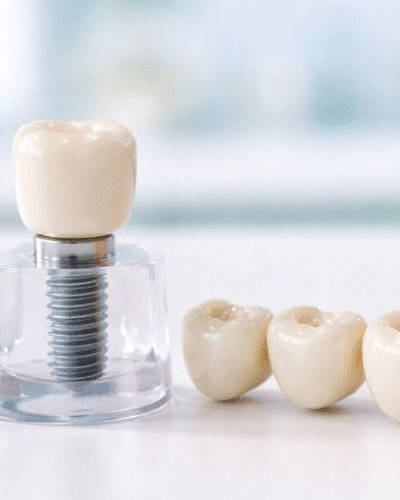
Bridges & Dental Implants

Back

Modern dentistry increasingly employs prosthetics in addition to traditional dentures.  Most individuals do not need dentures because they do not have all of their teeth missing; instead, they have a few gaps in their smiles as a result of tooth loss.  Having gaps between your teeth makes it more difficult to clean them correctly and reduces your chances of smiling.  Fortunately, you have various alternatives for repairing gaps in your mouth, the most frequent of which are dental implants and bridges.  These prostheses are intended to fill in the gaps in your mouth to the point where only a trained eye can detect missing teeth.


Bridges

Bridges operate by supporting nearby teeth.  A bridge may hold up to three teeth if the teeth on each side are sufficiently sturdy.  Simply said, bridges will link to healthy teeth and, ideally, cover the gap between missing teeth.  The dentist may have to file down slightly to create place for the bridge, but this will not harm the teeth.  Additionally, bridges may be readily removed.


Implants

Dental implants, like conventional bridges, endure a lifetime and do not impact the stability of surrounding teeth.  Although more costly than bridges, these implants stand out for their endurance and ability to replicate the look and function of natural teeth.  One of the most appealing aspects of implants is their lengthy life.  While the initial investment may be too expensive for some, there are various advantages to using dental implants over other forms of prosthesis, the most significant of which is the long-term stability they provide.


Bridges & Dental Implants
Monarch Dentistry welcome new patients

We accept Emergency walk-ins

Our Patients are always a priority and we do our best to accommodate those with pain and need to be seen by a Dentist.

Testimonials